
1. Bled Island Church (Marijino Vnebovzetje)
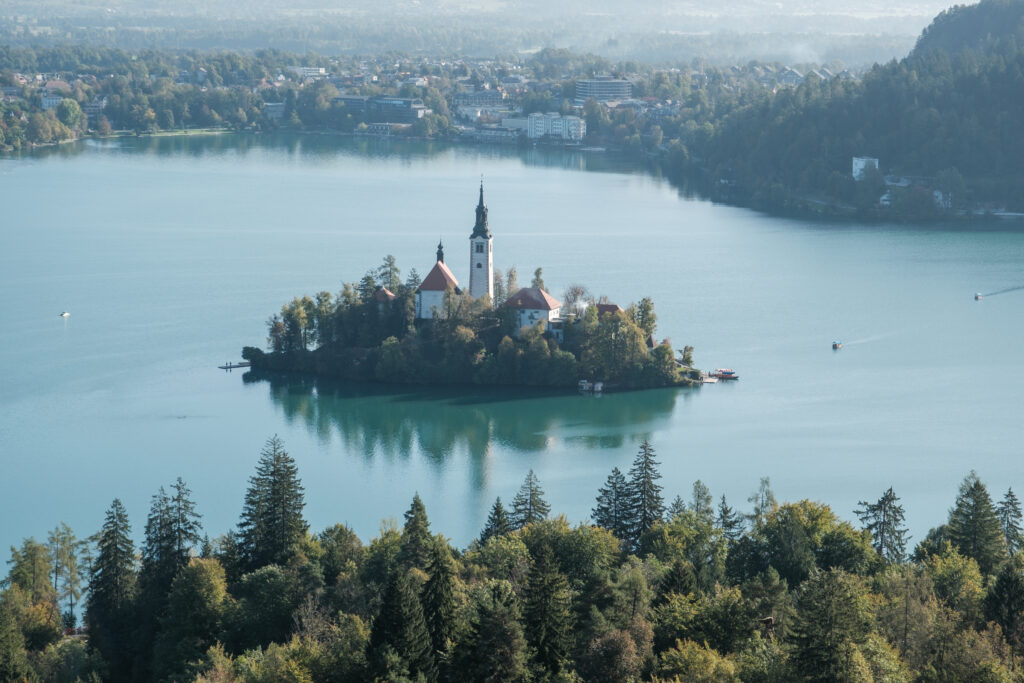
The Church of the Assumption of Mary stands on the only island in Lake Bled, about 50 km northwest of Ljubljana in the Karst/Alpine region. Visitors reach the island by traditional wooden boats called “pletna,” rowed from the lakeside promenade of Bled; the lake shore is easily accessible by car or public transport. The current church blends Baroque and Neo‑Gothic elements and stands on the foundations of a 12th‑century Romanesque basilica that was rebuilt in 1534 and later expanded; it is famous for its “wishing bell” in the tower, traditionally rung by pilgrims and visitors for good luck.
2. Piran St. George (Sv. Jurij)
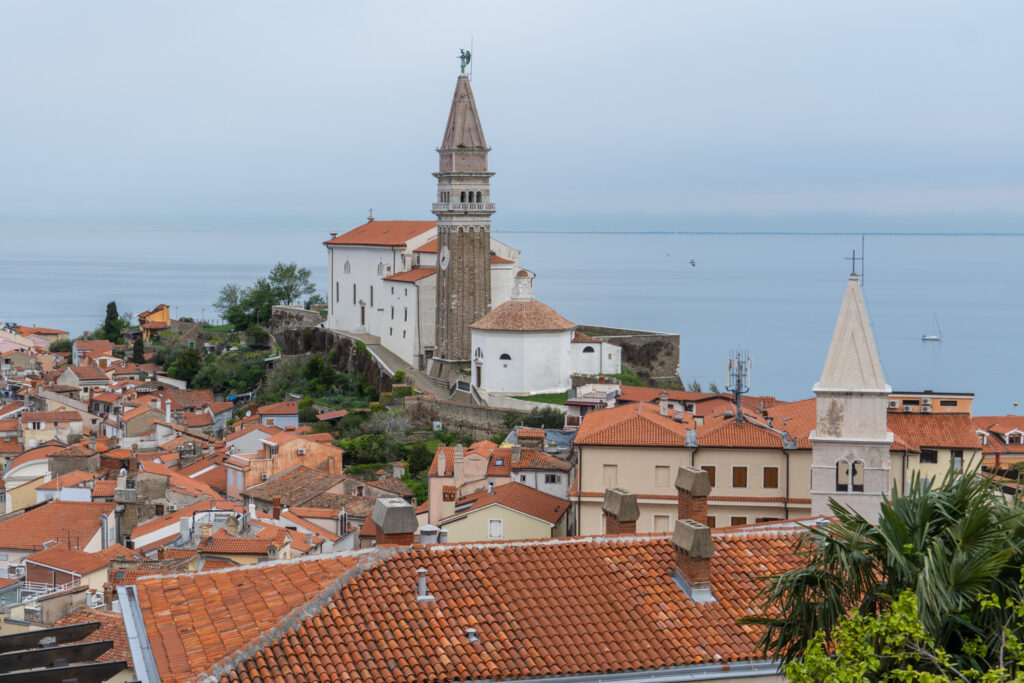
The Cathedral Church of St. George (St. George’s Church) is located in the heart of Piran on the Slovenian Adriatic coast, right on the harbor promenade; its separate bell tower stands a short distance away. Access is by driving along the coastal road to Portorož and then continuing to Piran’s old town, or by walking along the seaside path from Portorož. The church was expanded in the 14th century and later baroqueized in the 17th century, and today houses seven altars, Venetian paintings, and Gothic sculptures. The bell tower, built in the 17th century during Venetian rule, is a scaled‑down replica of the Campanile of San Marco and offers a full 360‑degree view over the old town, harbor, and coastline.
3. Ljubljana St. Michael (Sv. Mihael)
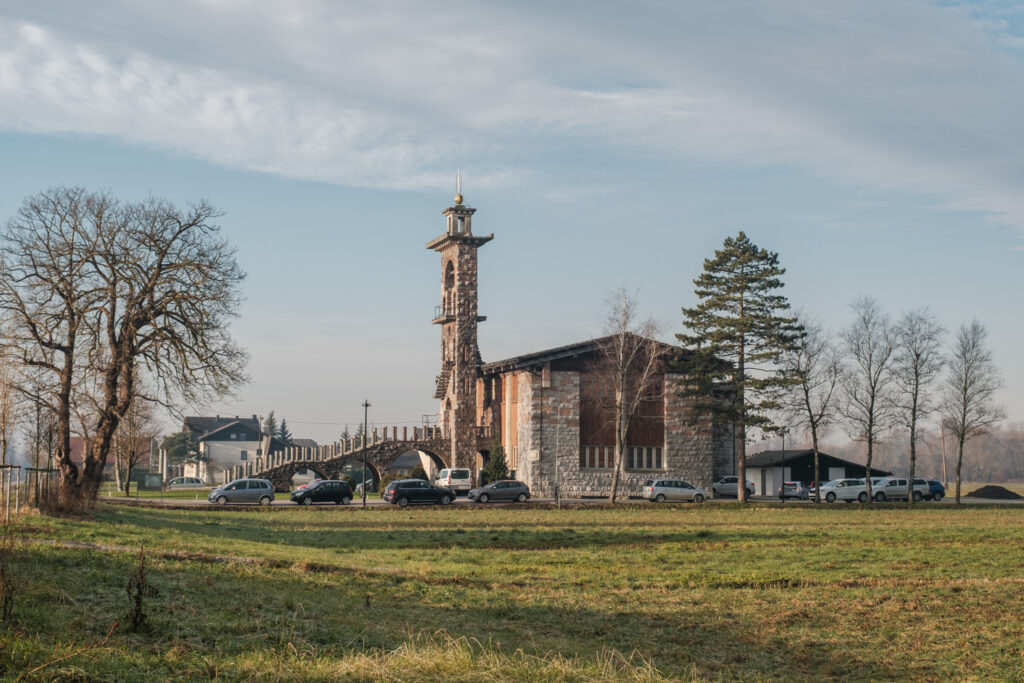
St. Michael’s Church stands in the Ljubljana Marsh (Ljubljansko barje), south of the Slovenian capital, in the middle of a flat, marshy landscape. Access is by car or bicycle from Ljubljana toward the wetlands; the church is clearly visible from the surrounding fields. Designed by Jože Plečnik between 1937 and 1940, the church fuses motifs of a Greek temple with open Slovenian‑style bell towers, creating one of Plečnik’s most original ecclesiastical buildings and a striking landmark in the otherwise flat marshland.
4. Jeruzalem Sorrowful Mother (Žalostna Mati Božja)
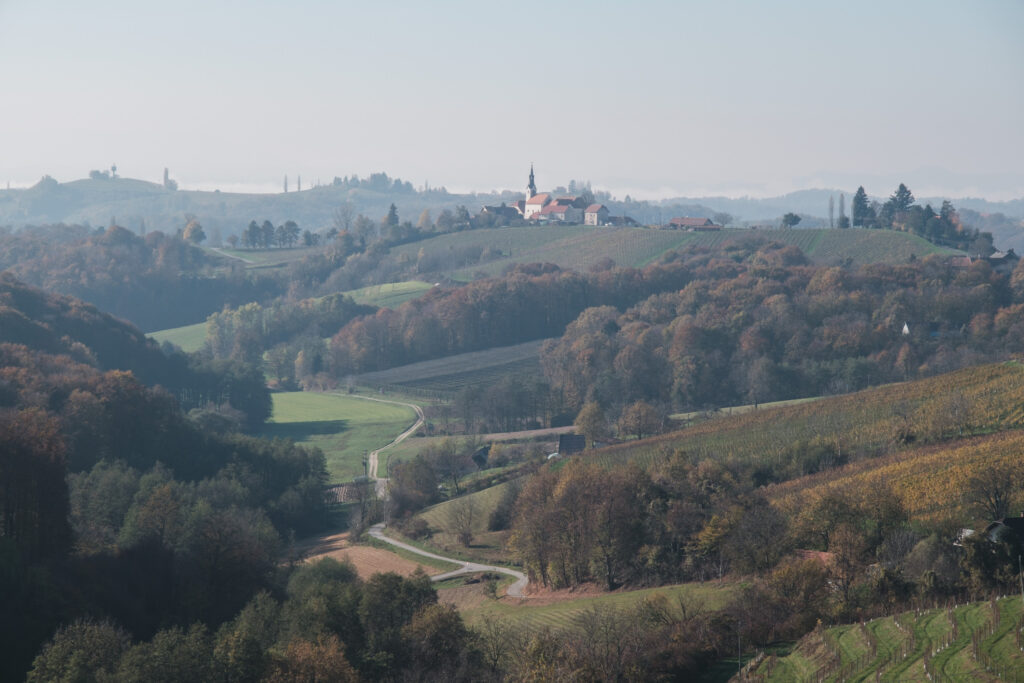
The Church of the Sorrowful Mother of God (Žalostna Mati Božja) rises above the village of Jeruzalem, a small wine and pilgrimage town in the Slovenian Carinthia region (Slovenska Koroška). Access is by following the Carinthian wine route toward Jeruzalem; from the village center, a short climb leads up to the church, which stands like a “lighthouse” over the surrounding vineyards and hills. Originally a Crusaders’ chapel from the early Middle Ages, it was transformed into a Baroque pilgrimage church in the 17th century and remains a key destination for both religious pilgrims and wine‑tourism visitors.
5. Kobarid St. Anthony (Sv. Anton Kobarid)
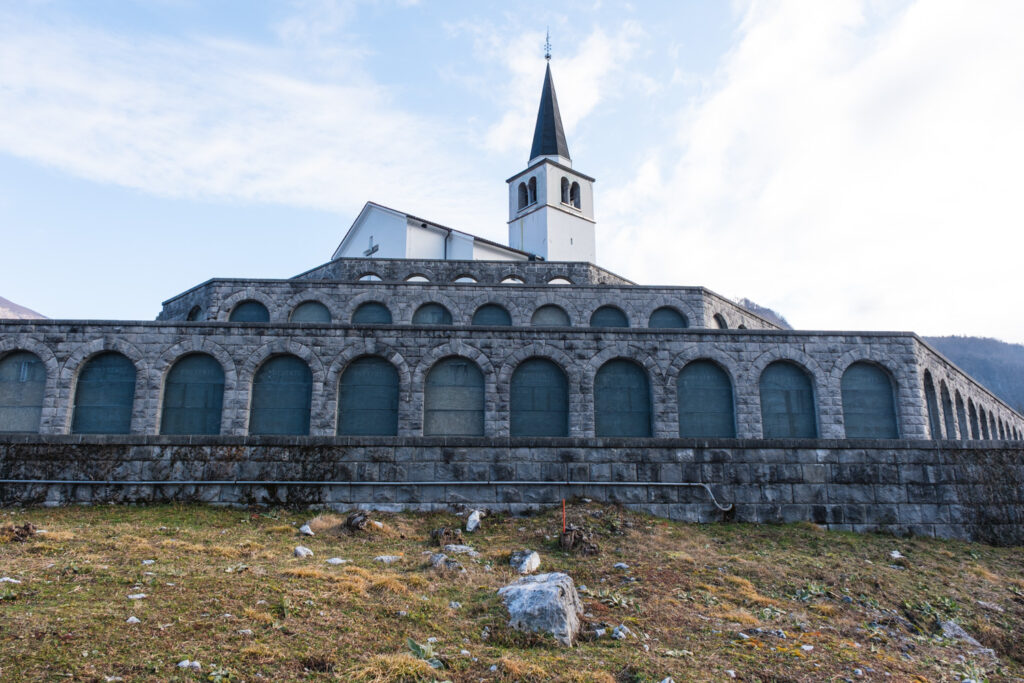
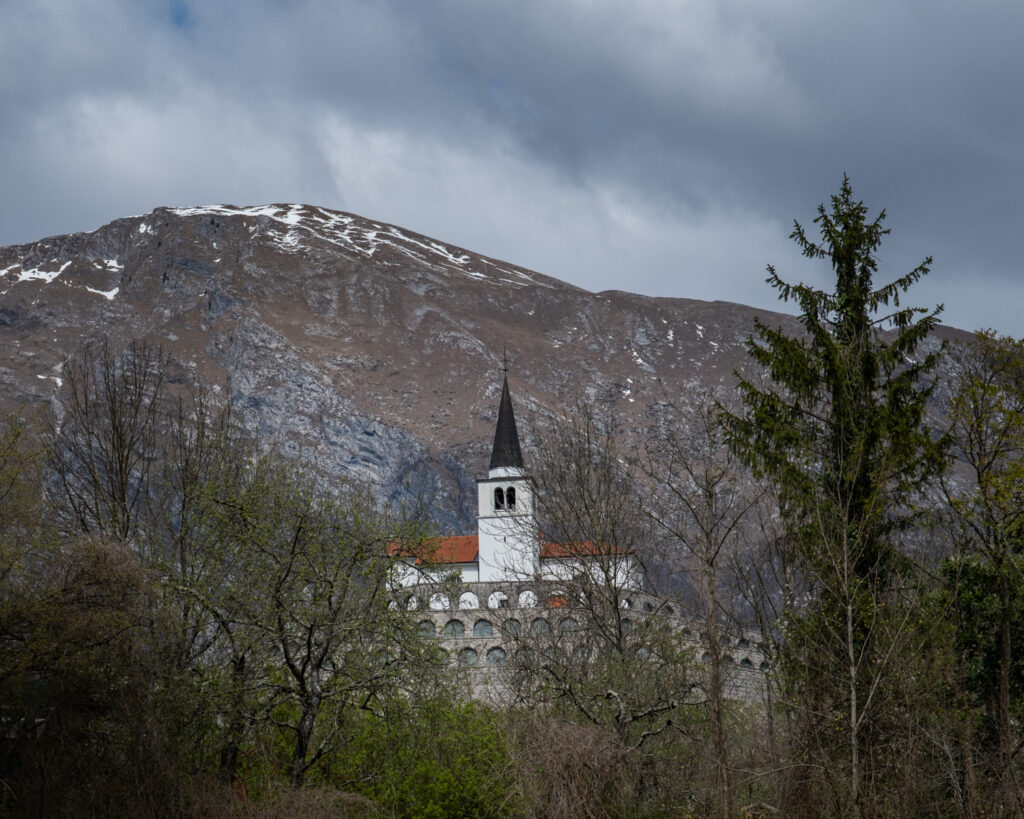
The Church of St. Anthony of Padua sits on the hill “Gradič” above the town of Kobarid in the Soča Valley (Isonzo Valley). It is reached via Kobarid and a short, well‑marked road or footpath leading up to the hilltop, which offers panoramic views of the town and the Isonzo River. The church was consecrated in the 17th century and stands next to a striking ossuary (Beinhaus) dedicated to the Italian soldiers of the Isonzo Front, which functions as both a religious site and a poignant war memorial from World War I.
6. Kamnik St. Eligius (Sv. Eligija)
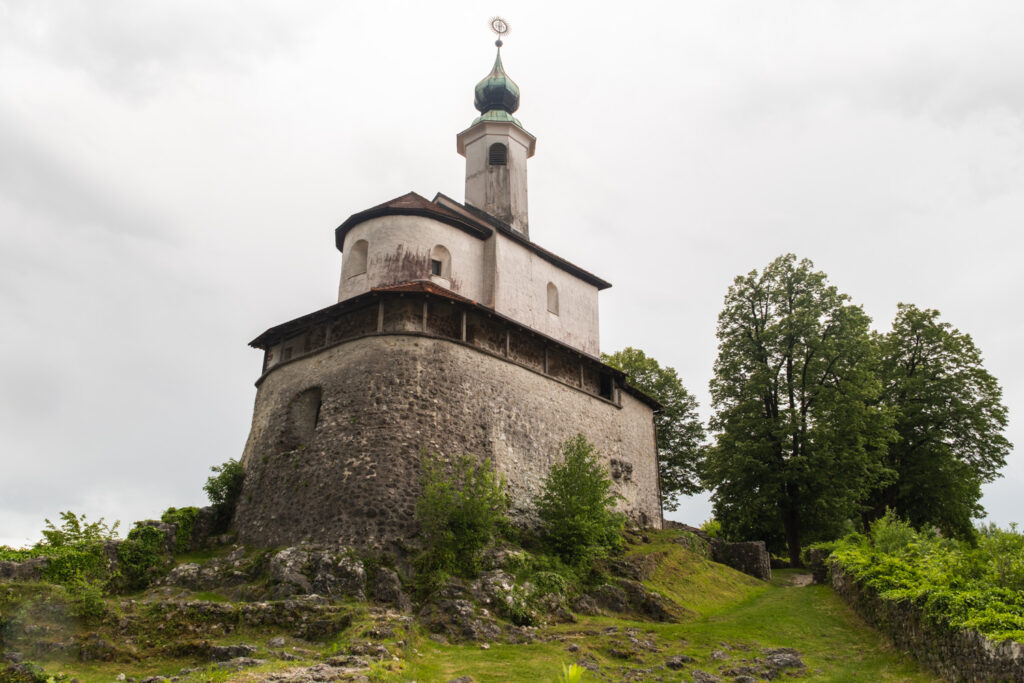
The Chapel of St. Eligius is located on “Mal Grad” (Mali grad), a small hill above the historic old town of Kamnik in central Slovenia. Access is by car or public transport to Kamnik, followed by a short walk up to the rocky outcrop where the chapel sits. The site includes a late‑antique and medieval fortified complex with an older chapel originally dedicated to the Virgin Mary and later reassigned to St. Eligius; it is archaeologically significant for its well‑preserved Romanesque structures and offers a quiet, reflective space at the edge of the town.
7. Pongratzen Pilgrimage (Sv. Pankracij)
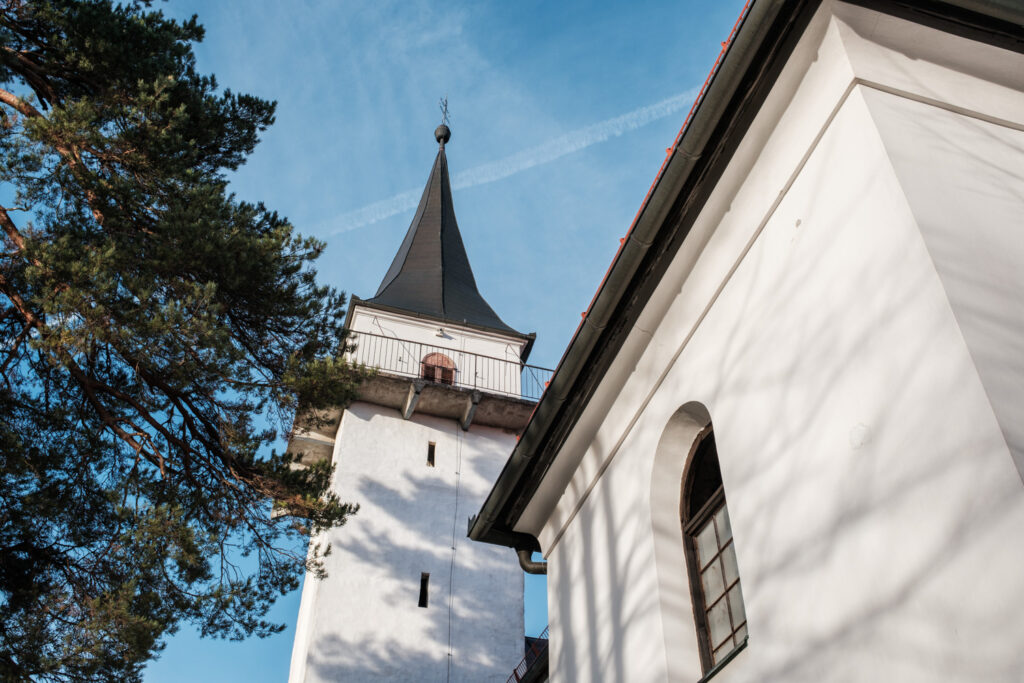
The pilgrimage church of St. Pankratij lies in the border region between southern Austria and Slovenia, near the village of St. Pongratzen (Gemeinde Sankt Marein bei Neumarkt), high above the valley with sweeping views toward Slovenia. Access is by car along the Styrian wine road, with parking available nearby; the church is also reachable on foot via a short local path. Built in the 13th century and later rebuilt, it is especially known for its tower, erected in 1935 as an observation tower and renovated in 2003 with EU and Austrian funding; until autumn, visitors can climb the tower for a 360‑degree panorama.
8. Selnica Holy Spirit (Sveti Duh Ostrem Vrhu)
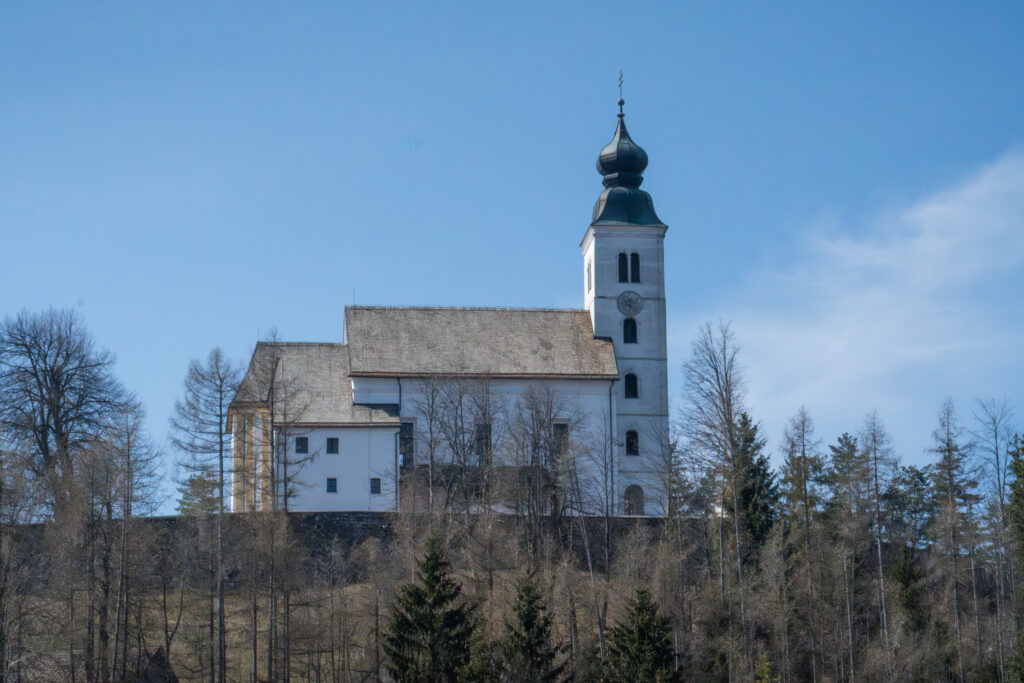
The Church of the Holy Spirit (Sveti Duh) stands on Ostrem Vrhu (Osterberg), right on the Slovenian–Austrian border, in the municipality of Selnica ob Dravi. It is reached via Selnica ob Dravi and a short road or footpath leading up to this prominent hill, which overlooks the Drava Valley and the border region. First built in the 17th century, the church served as a pilgrimage and excursion site; behind it lies a small chapel that adds to the spiritual atmosphere and makes the hill an important landmark at the edge of the Pannonian and Alpine zones.
9. Memorial Church of the Holy Spirit in Javorca (Tolmin)
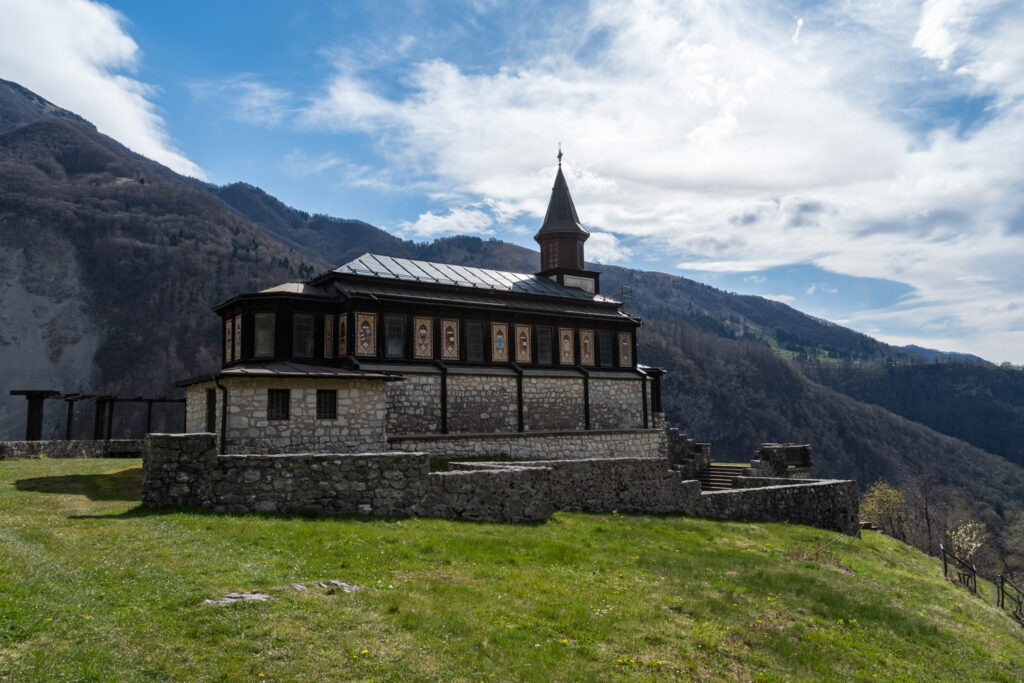
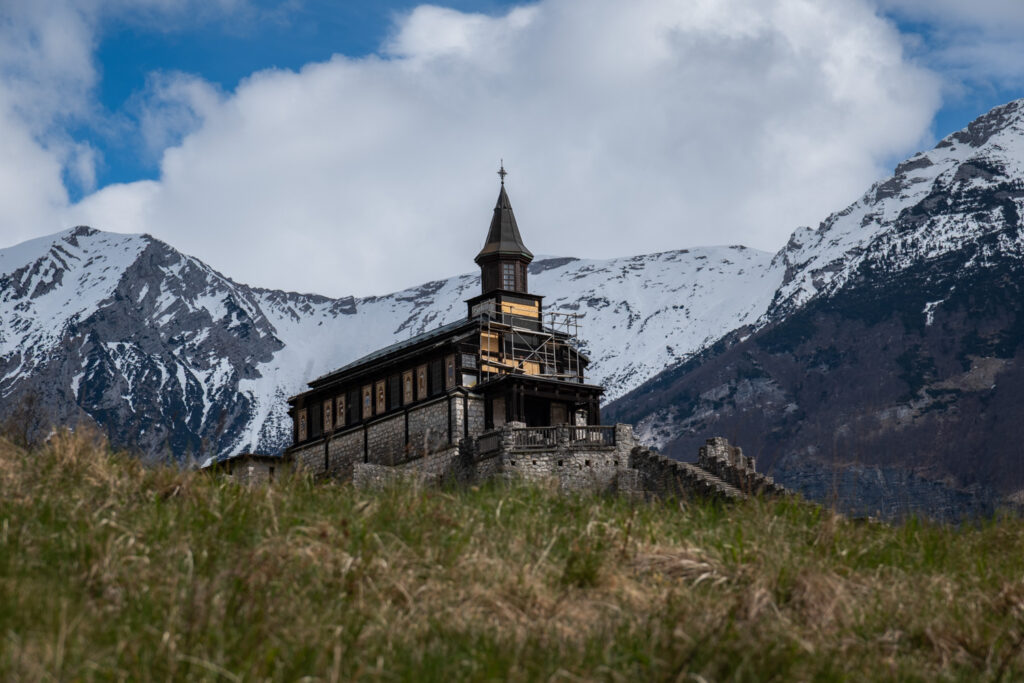
The Memorial Church of the Holy Spirit is perched on a steep cliff above the Tolminka Valley in Tolmin, western Slovenia, about 8 km from the town of Tolmin. Access is via a 7 km long, narrow gravel road, with a parking area at the base and a 15–20 minute uphill walk to the church. Built by soldiers of the Austro‑Hungarian 3rd Mountain Brigade between March and November 1916, it serves as a war and peace memorial for those who died on the Isonzo Front, combining wood construction, inscribed stone tablets, and a dramatic location on the “Walk of Peace” trail.
10. Drežnica Sacred Heart (Srca Jezusovega)
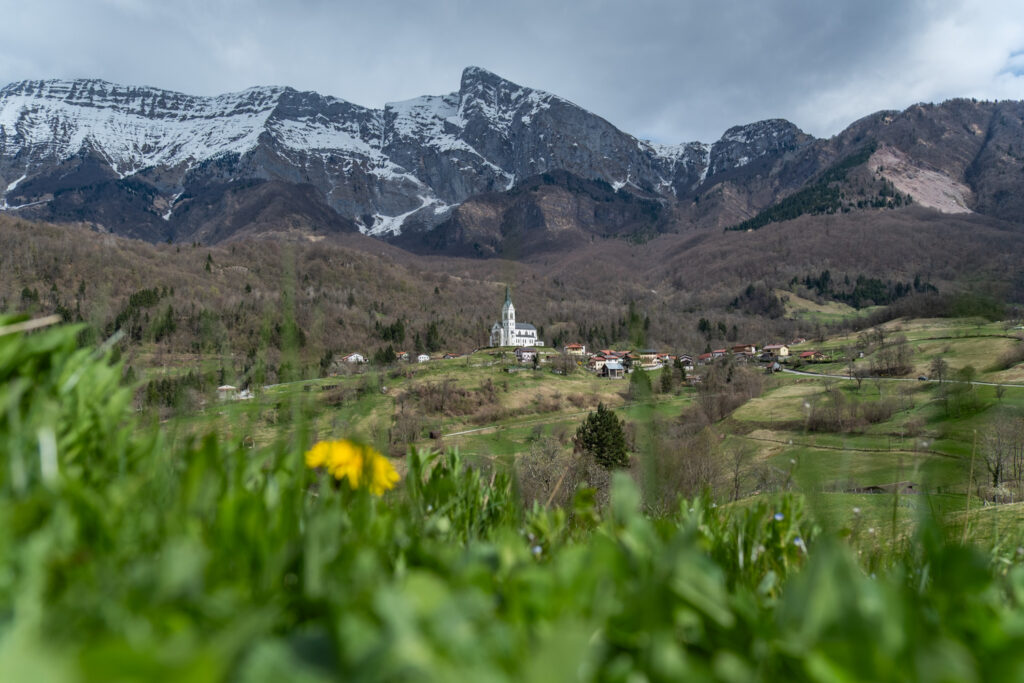
Towering over Drežnica village in Kobarid municipality, on a Soča River plateau with valley overlooks. Drive from Kobarid (10 mins), park nearby; note the 52m belfry added 1986. Built 1911-1914, miraculously spared Isonzo destruction despite nearby devastation; WWII-era modernist frescoes by Slovenian artists add vibrant depth.
11. Vršič Russian Chapel (Ruska Kapela)
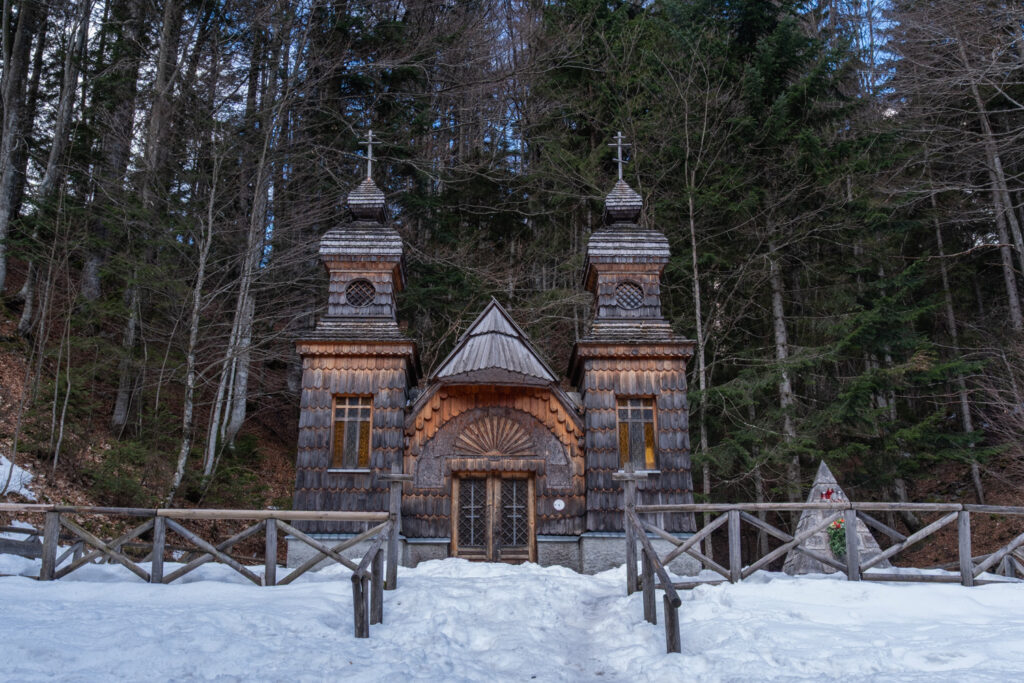
On Vršič Pass’s northern slopes in Triglav National Park, a wooden sentinel amid Julian Alps peaks. Drive the scenic Russian Road (hairpins galore) from Kranjska Gora or Bovec—park and short walk; open seasonally. Crafted 1916 by Russian POWs for St. Vladimir after a deadly avalanche during WWI road-building; onion domes, graves, and Cyrillic inscriptions forge an enduring Russo-Slovenian bond.
More Churches to Explore
Slovenia’s sacred map extends: Postojna’s twin-spire Cathedral (Sv. Trojica), Ptuj’s medieval Parish (Sv. Jurij), or Maribor’s Plague Church (Sv. Florijan)—each a hidden hike or vista away, ripe for your next adventure.
For travelers exploring Slovenia’s spiritual and architectural soul, these churches and chapels offer unforgettable stops where history, landscape, and devotion come together.